

Содержание
Buying a vehicle originating from major North American salvage auctions—such as Copart, IAAI, or Impact Auto—can offer substantial savings. However, navigating the secondary auto market requires diligent research. Once a vehicle is sold and removed from an official auction yard, sellers often perform cosmetic repairs, clear dashboard fault codes, or mask severe structural damage to resell the car at full market value.
To protect your investment and reveal a vehicle’s true condition prior to rebuild, you need access to raw historical data. Preserved auction logs and unedited yard photos provide the unvarnished facts behind every listing.
Why Do Official Auction Listings Disappear?
Once a lot is closed and retrieved from a salvage facility, official platforms like Copart and IAAI routinely archive or remove public access to the listing. This leaves a gap in transparency that dishonest resellers take advantage of.
Common tactics used to conceal a vehicle’s salvage background include:
- Title Washing: Transferring a title across different states or countries to clear a «Salvage» or «Rebuilt» brand stamp.
- Cosmetic Masking: Fixing outer body panels and applying fresh paint while leaving compromised frame rails or deployed airbag modules untouched.
- Odometer Discrepancies: Tampering with digital clusters or taking advantage of missing mileage records on older vehicles.
How to Trace Past Salvage Sales by VIN
While auction platforms remove past pages, independent archives continuously index lot details in real-time. By searching a unique 17-digit Vehicle Identification Number, you can reconstruct the complete digital paper trail of any salvage vehicle.
1. Retrieve Historical Sales Data
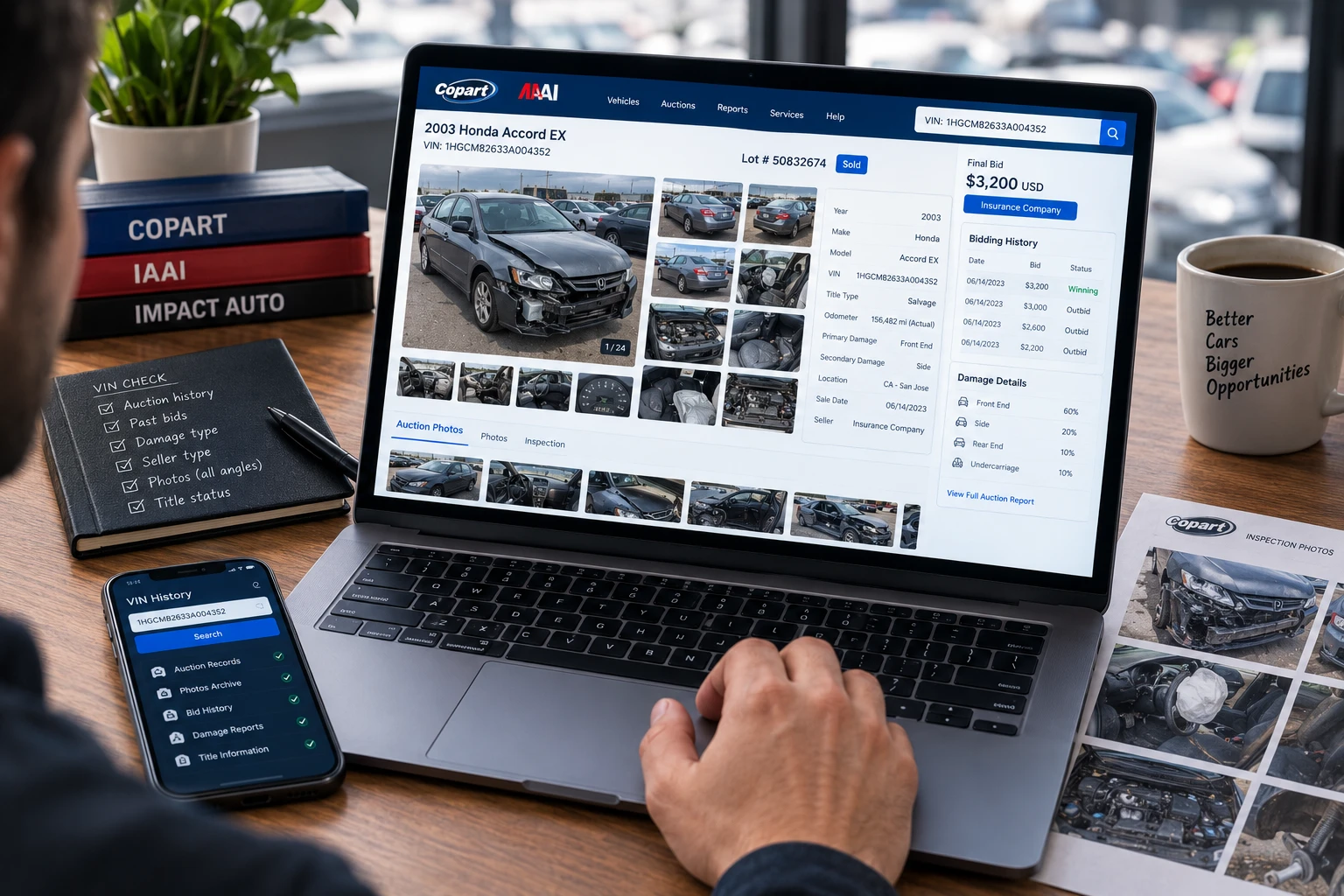
Before committing to a purchase, review the complete timeline of when and where the vehicle was auctioned. Accessing comprehensive copart and iaai auction records reveals crucial details including initial sale dates, primary damage codes (e.g., Hail, Flood, Side Impact), and whether the car was relisted multiple times.
2. Verify Past Bid Amounts and Seller Identity
Understanding who sold the vehicle helps gauge risk. Vehicles listed directly by Insurance Companies are generally sold in their true post-accident state. Conversely, lots listed by Dealers or Pure Sale vendors may indicate a flipped car. Conducting a thorough vin history lookup allows you to verify past winning bids, seller categories, and odometer readings recorded at the time of check-in.
Uncovering Original Auction Damage Photos
High-resolution inspection photos taken by yard personnel offer the most reliable evidence of an auto’s original damage. These pictures capture critical details long before body shop repairs begin, including:
- Deployed steering wheel, curtain, or knee airbags;
- Frame rail deformation, suspension collapse, or undercarriage rust;
- Submersion lines inside the cabin or engine bay in flood-damaged vehicles.
To evaluate structural integrity, review the complete set of original salvage car auction photos. Comparing archived yard photos against a seller’s current photos instantly highlights which parts were replaced and whether repairs were executed safely.
Essential Checklist Before Placing a Bid
- Cross-Check Primary vs. Secondary Damage: Ensure the listed damage type matches what is visually evident in the archive photos.
- Inspect Engine Bay and Interior Images: Look for missing components, cut wiring harnesses, or flood silt on seat rails.
- Review Title Certificate Type: Avoid vehicles designated with Junk, Parts Only, or Non-Repairable titles, as they often cannot be legally registered for road use.
Checking historic auction data before making an offer is the most effective way to eliminate guesswork when buying a salvage or imported vehicle. Cross-referencing unedited photo archives, verified bid logs, and independent VIN records ensures complete transparency, allowing you to buy with confidence and accurately assess true market value.